



Paying for Hospice Care
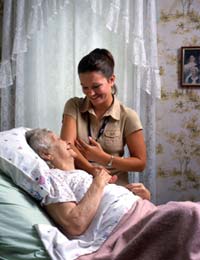 About two-thirds of hospice patients in New Jersey have their hospice care covered through Medicare Part A, specifically the Medicare Hospice Benefit. The Benefit pays for all hospice services related to the terminal illness, except that the patient is required to co-pay up to $5 or 5% of each prescription (whichever amount is lower).
The hospice agency you select determines which services will be provided, and the degree and frequency of services, based on patient/family need, Medicare compliance regulations, and available hospice resources. Services include medical care, nursing assistance, social work services, housekeeping, medical equipment related to the terminal illness, medications related to the terminal illness, various types of counseling (spiritual, emotional, nutritional), and hospice volunteers’ services. Later, the family will be offered free bereavement counseling from the hospice provider.
Hospice is covered under many private insurance policies and Medicare-managed care (Medicare Advantage Plans). A Medicaid Hospice Benefit is also available to patients who are eligible for or receiving Medicaid.
Patients without Medicare, Medicaid, or private insurance may pay out of pocket for hospice care. These fees are set by the hospice agency itself. Many hospice organizations may use a “sliding scale” for families in difficult financial circumstances and may choose to provide care without charge in some exceptional cases. Each hospice has its own policies on these matters. The hospice organization will likely assess the patient and family’s financial resources to determine whether to apply the “sliding scale” formula or provide care without charge, and may decline the request to serve if families refuse to cooperate in the assessment.
No federal or state law requires a hospice agency to provide its services for free or at a discounted rate. Many agencies, however, are glad to work something out with families in true financial need.
Below, I have listed many of my clients’ frequently asked questions, along with my answers, which you may find helpful.
Is hospice care available through Medicaid?
Yes. New Jersey established a Medicaid Hospice Benefit in 1992. Its services are virtually identical to those of Medicare. If you are eligible for Medicaid, let your hospice know as soon as possible, preferably before admission.
Be aware, however, that the federal government does not allow Medicaid recipients to receive two kinds of Medicaid benefits (“waiver programs”) at once.
Hospice is a Medicaid “waiver program.” Admission to hospice through the Medicaid Hospice Benefit may disqualify a recipient from continuing other Medicaid benefits, such as CCPED. You will not risk your existing Medicaid benefits by discussing this issue openly with a hospice social worker.
Many Medicaid hospice patients receive their hospice services in nursing homes where they live. Their Medicaid Hospice Benefit covers both hospice services and room and board at the nursing home.
Are you sure there’s no cost for hospice?
If you are receiving hospice care through Medicare Part A or through Medicaid, all costs related to the terminal illness will be covered, except that the patient/family will need to co-pay $5 or 5% of the cost of each prescription (whichever is less).
If you are receiving your hospice care through private insurance or managed care, you must check your policy to determine coverage.
Two things are especially important for patients and families to know:
Your hospice benefit will not cover costs of medications, medical equipment, or services unrelated to the terminal diagnosis – for example, if someone has had a heart condition for years but is admitted to hospice because of terminal cancer, the hospice benefit will pay for the cancer drugs, but not the heart drugs, with some exceptions, of course. If you wonder whether an expense is related to your terminal diagnosis or will continue to be covered, please speak to hospice staff.
The costs of room and board are not part of the hospice benefit. The exception applies to Medicaid Hospice beneficiaries, whose nursing home room and board can be covered under the Medicaid Hospice Benefit.
Can I get hospice care in a nursing home?
Hospice can provide care to a patient wherever that patient lives, if it is a safe environment for the patient and the hospice caregiver. Many (but not all) nursing homes have contracts with hospice that allow hospice to provide care in the nursing home.
A nursing home resident who is ready for admission to hospice care should ask the nursing home’s director of nursing which hospice(s) provide care in that facility.
If someone is considering entering a nursing home and is receiving (or ready for) hospice care, it would be a good idea to ask the hospice program which nursing homes it works with.
NJHPCO has found that some nursing homes will not allow hospice to practice in their facilities. NJHPCO and many legal experts say that it violates the rights of nursing home residents for a nursing home to refuse them access to hospice care within its facility, since hospice care is an entitlement under Medicare Part A and New Jersey Medicaid. Some nursing homes disagree with this position.
FYI, hospice can enter into a contract with a nursing home to provide care to a single patient. Many nursing homes will do so.
How would I pay for hospice care in a nursing home?
According to federal rules, one cannot access both the Medicare Hospice Benefit and the Medicare Nursing Home Benefit simultaneously. While the previous sentence is technically accurate, patients receiving the Medicaid Hospice Benefit can have their nursing home room and board paid for through that benefit.
What is a “hospice unit”?
A small but growing number of New Jersey hospitals have a “hospice unit.” This section of the hospital is designed to provide a home-like environment where patients can receive hospice services. Care is provided by the hospice, and hospice staff are present 24 hours per day in these hospice units. Not all hospitals have hospice units.
It is the hospital’s decision whether to admit a patient to its hospice unit. The hospice will consider factors such as severe pain, complex symptom management, family readiness to accept the patient back home, the absence of a primary caregiver at home, financial resources available to the family and to the hospice, and the safety of the patient’s home environment.
Policies regarding admission, payment for room and board, and length of stay in a hospital hospice unit are determined by each hospital.
What is a “hospice house” or “residential hospice”?
There are a few “hospice houses” in New Jersey, also called “hospice residences.” These are free-standing residences, each run by a licensed hospice for hospice patients who have no other appropriate site to receive hospice services. These are home-like settings in which hospice patients are expected to reside until they die. Most New Jersey hospices do not sponsor their own privately run hospice house(s).
For hospices that do offer a hospice house, the decision to admit a patient to the hospice house is made by the hospice organization. The hospice will take into account factors such as the absence of a primary caregiver at home, the family’s financial resources, the hospice’s financial resources, the family’s readiness to accept the patient back home, and the safety of the patient’s home environment.
Policies regarding admissions and room-and-board payment are determined by each hospice agency. To find out if a hospice house exists near you, call NJHPCO at 908-233-0060.
How would I pay for care in a hospice house residence?
This is a matter to be worked out between the hospice and the family. If you believe a prospective hospice patient can only be cared for in a hospice residence, contact the social worker at a hospice with a hospice house (call NJHPCO at 908-233-0060 to find which hospices have houses). The hospice will require a financial assessment of the family’s resources and insurance coverage before admitting the patient to the hospice house. Requests for placement at a hospice house far exceed the number of available beds.
Can I get hospice care in an assisted living residence?

Fredrick P. Niemann Esq.
New Jersey’s licensure law allows hospice care in any kind of residence. Let the hospice staff know of the living arrangements, and they will work with the staff at the assisted living residence.
If you would like to speak to a NJ hospice attorney, contact Fredrick P. Niemann, Esq. at (732) 863-9900 or email him at fniemann@hnlawfirm.com to schedule a consultation about your particular needs. He welcomes your calls and inquiries, and you’ll find him very approachable and easy to talk to.
Written by Fredrick P. Niemann, Esq. of Hanlon Niemann & Wright, a New Jersey Hospice Care Attorney serving these New Jersey Counties:
Monmouth County, Ocean County, Essex County, Cape May County, Camden County, Mercer County, Middlesex County, Bergen County, Morris County, Burlington County, Union County, Somerset County, Hudson County, Passaic County